Last Updated: June 2026 | Season 13: Season of Reckoning
Quick Summary
Diablo 4 is a paid game (~₱1,995 physical / ~₱3,079 digital) — not permanently free. Xbox Game Pass users can play the base game right now at no extra cost. For new players in 2026: play the campaign once on Hard difficulty, unlock the Campaign Skip account-wide, then use the Tree of Whispers and Helltides as your main endgame loop. Paragon unlocks at Level 60. Season 13 ends June 30, 2026.
Key Takeaways
- Diablo 4 is NOT free-to-play — it requires a purchase or an active Xbox Game Pass subscription
- The old World Tier 1/2 system is gone — the current options are Normal, Hard, Expert, Penitent, and Torment I–XII
- Campaign Skip unlocks after your very first full playthrough — your first character absolutely cannot skip it
- Paragon boards unlock at Level 60 in the current version — not Level 50 (older guides are outdated on this)
- Start on the Seasonal Realm for the best new-player experience in 2026
Is Diablo 4 Free? (PH Players, Here’s the Honest Answer)
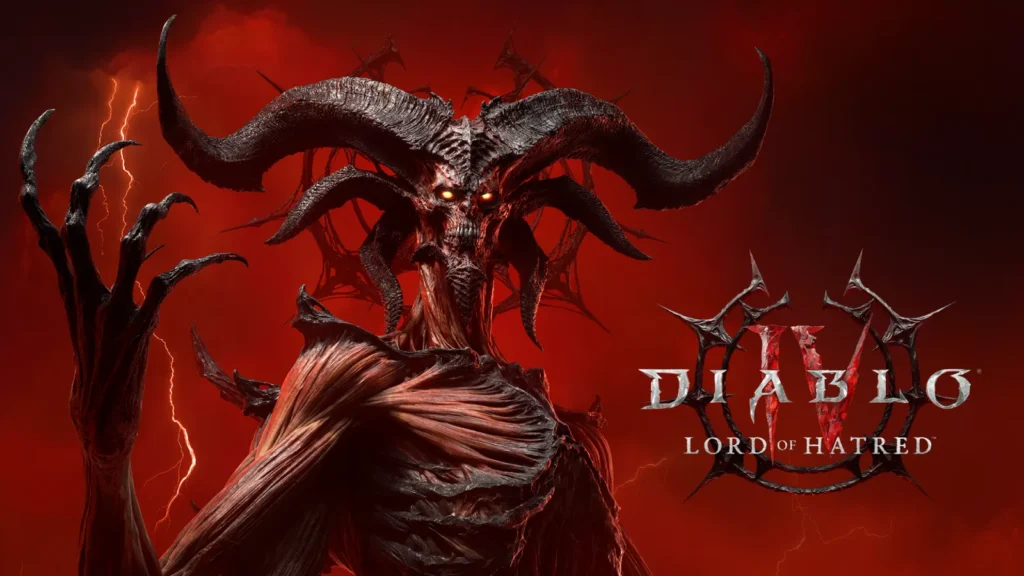
If you’re new to Diablo 4 and searching “Diablo 4 free Philippines” or “is Diablo 4 free to play,” you’re not alone — and this Diablo 4 beginner guide will clear it up before you spend a peso.
Diablo 4 is not free-to-play. It’s a premium game that requires either a purchase or an active Xbox Game Pass subscription. What generates the confusion:
- Limited-time free trials. Blizzard periodically opens the game to everyone. The most recent was the Paladin Free Trial in March 2026, capped at Level 25 — progress carries over if you later buy the full game.
- Xbox Game Pass. The Diablo 4 base game has been included in Xbox Game Pass (PC and Console) since March 28, 2024. If you already pay for Game Pass, you can start playing right now.
- Sale pricing. The base game drops to around $29.99 USD (~₱1,845) during Blizzard and Steam sales.
If you’ve wondered about similar “is it free” questions for other titles, we’ve covered whether Minecraft is free in the Philippines — the same logic applies here: premium game, no permanent free tier, but periodic trial events.
Here’s the current pricing picture for PH players:
| Edition | USD | Approx. PHP |
|---|---|---|
| Base Game digital | ~$49.99 (sale: ~$29.99) | ~₱3,079 (sale: ~₱1,845) |
| Base Game physical disc (Datablitz / Game One PH) | — | ₱1,995 |
| Lord of Hatred Standard (includes Vessel of Hatred) | $39.99 | ~₱2,463 |
| Age of Hatred Collection (base + both expansions) | $69.99 | ~₱4,311 |
PH tip: The physical disc at Datablitz and Game One PH is consistently the cheapest entry point at ₱1,995. For digital purchases, GCash works as a digital wallet on both Battle.net and PlayStation Network in the Philippines. The Age of Hatred Collection ($69.99 / ~₱4,311) is the cleanest single buy if you want the full 2026 experience — base game plus both expansions included. For more on using GCash for console and PC game purchases, see our Genshin Impact Top-Up Guide for the Philippines — the same payment flow applies across storefronts.
Choose Your Class First
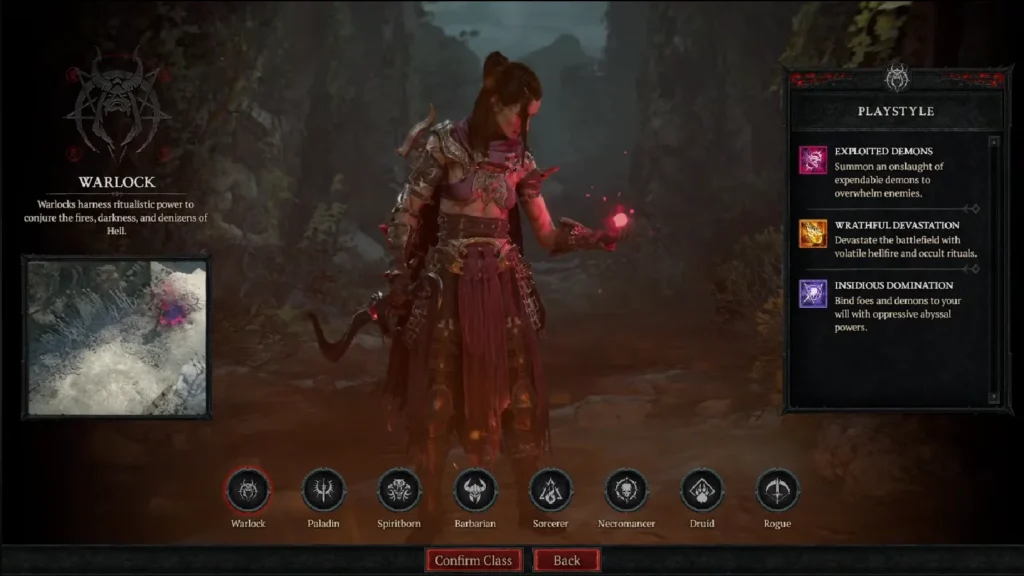
As of Lord of Hatred, Diablo 4 has eight playable classes. You can always make alts, so don’t overthink the first pick — but here’s what each class is actually like based on our gameplay testing:
| Class | Playstyle | Best for |
|---|---|---|
| Sorcerer | Ranged AoE burst | Beginners who prefer fighting from a distance |
| Necromancer | Summoner / minion army | Laid-back style, strong natural survivability |
| Barbarian | Melee bruiser | Straightforward, extremely satisfying damage |
| Paladin (Lord of Hatred) | Tank with auras and Oaths | Sturdy, very readable — great first expansion class |
| Rogue | Fast melee/ranged combo | High skill ceiling — strong this season but demanding |
| Druid | Shape-shifting hybrid | Complex but rewarding for patient players |
| Spiritborn (Vessel of Hatred) | Spirit animal combo system | Unique and flexible playstyle |
| Warlock (Lord of Hatred) | Chaos magic, high risk/reward | Advanced players only |
In our testing, Sorcerer and Necromancer are the most forgiving first-character picks. Sorcerer turns the screen into a light show while staying safely out of reach; Necromancer lets an army do the work, which is very forgiving when you’re still learning enemy patterns. The Paladin is also excellent if you own Lord of Hatred — it was clearly designed with readability in mind, with aura effects that passively support your stats and Oath mechanics that give you clear build goals.
If you’re coming from other ARPGs like the games covered in our Path of Exile 2 Beginner Guide, the Rogue will feel the most familiar — but save it for a second character. And if you grew up on Ragnarok Online class archetypes, the Paladin’s tank-and-aura fantasy maps almost perfectly to what you already know.
Diablo 4 Difficulty Explained: What Are World Tiers in 2026?
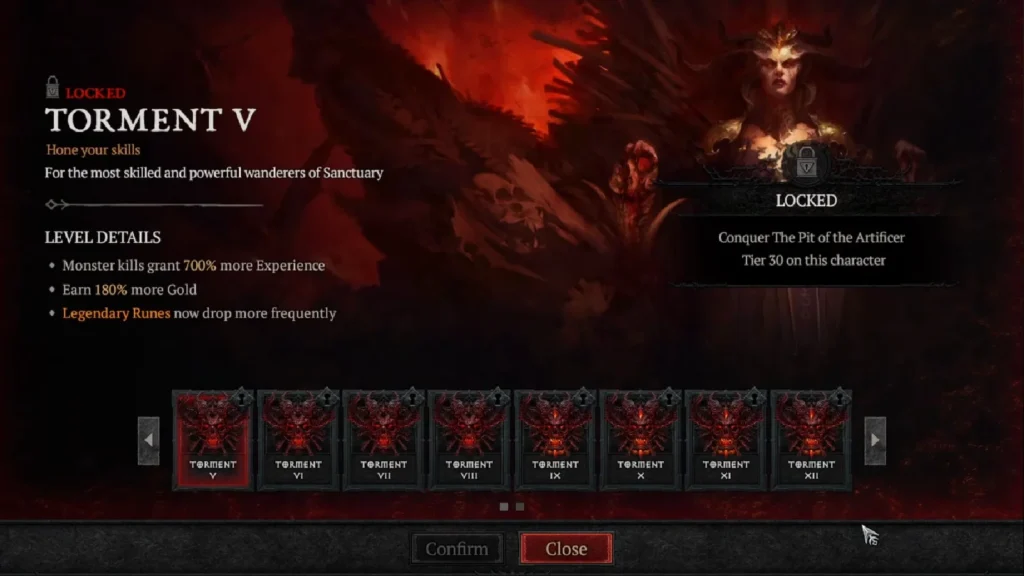
If you’re arriving from older Diablo 4 guides asking about “World Tier 1 vs 2,” here’s the critical update: the World Tier system no longer exists. Blizzard replaced the original four-tier setup with Patch 2.0 in October 2024, and Lord of Hatred expanded it again in April 2026.
The current difficulty ladder for new characters:
Normal → Hard → Expert → Penitent → Torment I through XII
For a complete beginner, the real choice is between Normal and Hard:
- Normal: Enemies die fast, bosses are forgiving. Great for pure ARPG newcomers or anyone who just wants to experience the story at their own pace.
- Hard: +75% additive XP and gold bonus over Normal. Enemies are tougher, but nothing feels punishing. This is the recommended starting difficulty if you’ve played any action-RPG before.
You can change difficulty at any time from the character-select screen — no commitment, no penalty. In our gameplay testing, most experienced players settle into Hard for the campaign and bump to Expert once their first build-defining Legendary slots in around Level 35–45.
Torment difficulties (I through XII) unlock at Level 70 — the current level cap — by clearing corresponding tiers in The Pit of the Artificer. Torments V–XII require the Lord of Hatred expansion.
Diablo 4 Campaign Skip: Should You Skip and What Do You Unlock?
Short answer: not on your first character — you literally cannot. The Campaign Skip toggle only becomes available at the character-creation screen after one character on your account has finished the full campaign: all six acts plus the epilogue.
Once you’ve done that one full playthrough, every future character — including seasonal alts — gets the toggle. Here’s why that first run is worth doing beyond just the story:
What unlocks account-wide after completing the campaign once:
- Campaign Skip toggle for all future characters
- Mount access from Level 1 on alts (vs. Act 4 during your first playthrough)
- All five major regional waypoints unlocked immediately
- Tree of Whispers active from character creation
- Altars of Lilith bonuses — permanent stat boosts shared account-wide within each game mode
- All Codex of Power Aspects earned during the run
- Renown rewards: bonus Skill Points, Paragon Points, and potion capacity
Your first playthrough is not just story time — you’re banking account-wide resources for every character you ever make. Play it fully, pick up side quests along the main path, grab Altars of Lilith as you pass through each region, and then skip freely on every future alt.
How Paragon Works in Diablo 4 (Beginner Breakdown)
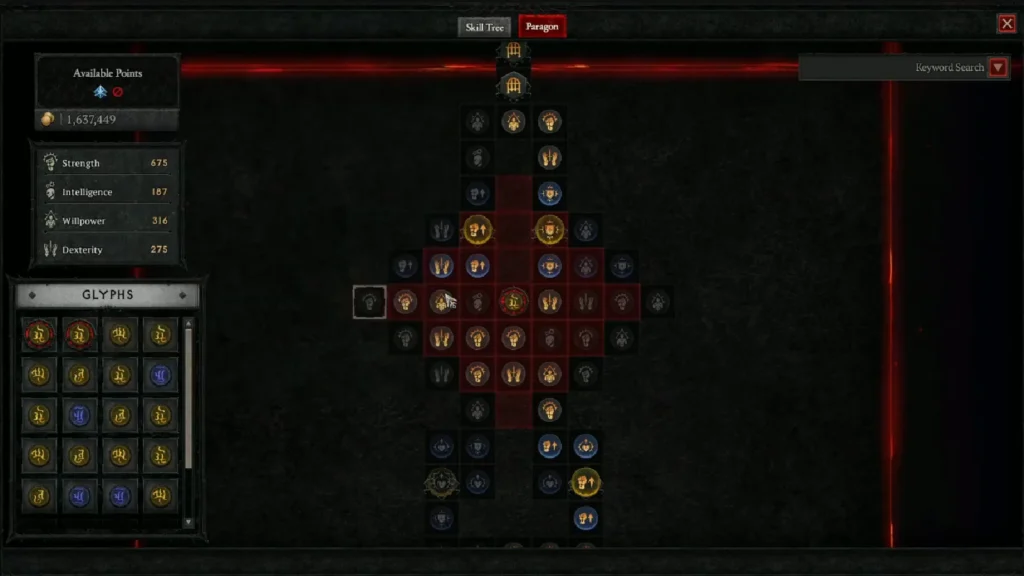
Paragon is Diablo 4’s deep character optimization layer, and the first time you see the board it looks like a nightmare grid designed to overwhelm you. It isn’t. Here’s the simple version.
Paragon unlocks at Level 60 — not Level 50, as many older guides still state. That changed with the Lord of Hatred rework. The current level cap is 70, so Paragon runs from Level 60 to 70 during your leveling phase, with additional points available via Season Rank rewards (42 extra points in Season 13).
What you’re working with:
- Board: A grid of nodes surrounding a central Glyph Socket. You start with your class’s Starting Board.
- Nodes: Normal (+5 to one attribute), Magic (small multi-stat), Rare (larger bonus with an attribute threshold that unlocks a second bonus), and Legendary (the defining build bonus — the entire reason you chose that board).
- Glyphs: Socketable items dropping from Level 60+ endgame content. Each Glyph’s power scales based on attributes allocated within its radius on the board. Glyphs are leveled up only by completing The Pit of the Artificer — a standard clear grants 3 upgrade attempts; a deathless clear grants 4.
- More Boards: Reach a Board Attachment Gate at the edge of any board to unlock an additional one. Up to five boards active at once.
The beginner move: Open a build guide for your class on Maxroll or Mobalytics, and follow the Paragon path exactly. Your only goal during the Level 60–70 window is reaching the Legendary node on your Starting Board. Everything else is filler until then. Paragon respec is cheap — experiment freely once you understand the system.
Season vs Eternal Realm: Which Should You Pick?
Every new character in Diablo 4 starts in one of two Realms:
Seasonal Realm — A fresh start each season. Characters begin at Level 1 with no carry-over. Seasonal mechanics, Battle Pass cosmetic rewards, and the active community live here. When the season ends, your character automatically migrates to Eternal — nothing is lost.
Eternal Realm — Permanent characters that never reset. No seasonal content, no seasonal rewards. Think of it as the archive for graduated seasonal characters.
For new PH players in 2026: make your first character on the Seasonal Realm. The player population is larger, balance patches land here first, and your character migrates to Eternal automatically at the end anyway. There is no reason to start on Eternal as a new player.
Where we are right now: Season 13 — Season of Reckoning — launched April 28, 2026 and ends June 30, 2026. Season 14 starts the same day. If you’re starting now during the anniversary window (events run through June 9), the Mother’s Blessing multiplicative XP bonus will meaningfully accelerate your leveling pace.
Diablo 4 Endgame Guide: What to Do After the Campaign
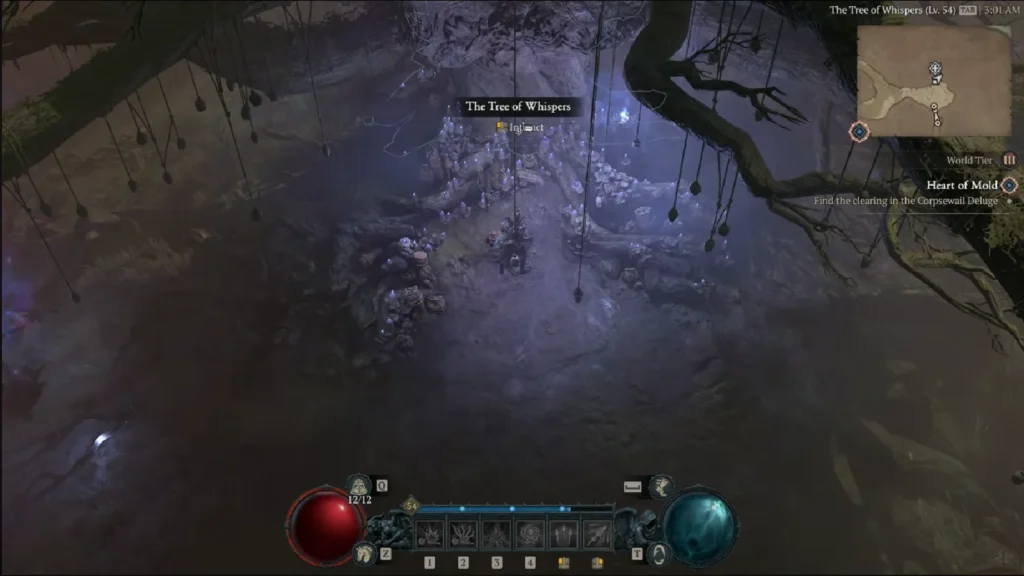
Once you finish the campaign and reach roughly Level 50–60, the real game opens up. Here’s what’s waiting:
Tree of Whispers — Diablo 4’s open-world bounty system. Complete marked objectives across Sanctuary to earn Grim Favors, turn in 10 at the Tree in northeastern Hawezar for a major gear cache and Nightmare Sigils. This is your anchor loop from the moment it unlocks in Act 6 — everything else feeds into or alongside it.
Helltides — Time-limited zone events where Hell invades a region. Kill enemies to collect Aberrant Cinders, then spend them at Tortured Gift chests for targeted gear slots. Helltides also generate Tree of Whispers bounties simultaneously, so the two loops run at the same time in the same zone.
Nightmare Dungeons — Sigil-activated tougher dungeons with random modifiers. The primary XP and gear source from Level 60 onward.
The Pit of the Artificer — Timed, endlessly scaling dungeons. The only source of Glyph upgrades, and the gate to unlocking Torment difficulty tiers. This becomes your main push activity at Level 70.
Lair Bosses — Summoned from materials collected across other activities. Duriel and Andariel drop the best Uniques and Mythic Uniques in the game. Aim for Torment I–II stability before pushing these.
War Plans (Lord of Hatred required) — The headline 2026 endgame system. After completing the Lord of Hatred campaign in Skovos, you unlock a playlist builder where you chain up to five endgame activities — Helltides, Nightmare Dungeons, Tree of Whispers, Lair Bosses, The Pit, Infernal Hordes, Kurast Undercity — into a single run. Each activity you complete earns Activity Points toward its own skill tree, permanently boosting the rewards that activity produces. In our experience, War Plans is what turns the Diablo 4 endgame from “a list of things to do” into a directed progression path — you’re not just farming, you’re upgrading the farming system itself.
Echoing Hatred (Lord of Hatred required) — Endless wave survival that scales until your build fails. The ultimate stress test for a fully built character.
A starter endgame loop: Clear five Whispers during an active Helltide (same zone, two activities stacked), turn in for cache and Sigils, run two Nightmare Dungeons for Glyph progress, then drop into a War Plan chain when you have Lord of Hatred. Repeat until Torment push.
Common Beginner Mistakes
Selling Rare and Legendary gear instead of salvaging. Salvage everything at the Blacksmith. Crafting materials outvalue gold at this stage, and you’ll need them for Enchanting and Tempering your gear.
Spreading Skill Points across every cool-looking ability. Pick one primary damage skill, one generator, and two support utilities — then invest. Diablo 4 rewards commitment to a skill rotation.
Ignoring Altars of Lilith. There are 160 Altars across Sanctuary. Each grants a permanent stat bonus shared account-wide within your game mode. Grab them as you naturally explore — they cost nothing during normal traversal.
Jumping into harder difficulty before the build exists. If white-mob trash is consistently chunking your HP in Penitent, you’re not ready for Torment. Gear through Nightmare Dungeons and Helltides first.
Buying the Premium Battle Pass on day one. Try the free track first. You have 40–60 hours of content ahead before cosmetics become a relevant priority.
FAQ
Is Diablo 4 free to play in the Philippines?
No. It requires a purchase (approximately ₱1,995 for a physical disc at Datablitz or Game One PH, or around ₱3,079 digital) or an active Xbox Game Pass subscription. Blizzard periodically runs limited free trial windows — check the official Diablo IV site before buying.
What is the best class for beginners in Diablo 4 in 2026?
Based on our testing, Sorcerer and Necromancer are the most beginner-friendly choices in 2026. If you own the Lord of Hatred expansion, the Paladin is also a strong first pick — sturdy, readable, and forgiving of early build mistakes.
Can I skip the campaign in Diablo 4 on a new account?
No. The Campaign Skip toggle is locked on brand-new accounts. It unlocks for all future characters only after one character completes the full base game campaign (all six acts plus the epilogue).
What happened to World Tiers in Diablo 4?
The old World Tier 1–4 system was replaced in Patch 2.0 in October 2024. The current difficulty options are Normal, Hard, Expert, Penitent, and Torment I through XII. New players should start on Hard — it gives a +75% XP and gold bonus over Normal.
When does Paragon unlock in Diablo 4 in 2026?
Paragon boards unlock at Level 60 since the Lord of Hatred expansion rework. The current level cap is 70. Many older guides still say Level 50 — those are outdated.
Do I need the Lord of Hatred expansion for Diablo 4?
Not to start. The base game covers the full campaign, Seasonal play, and mid-tier endgame. Most of the 2026 deep endgame — War Plans, Echoing Hatred, Torments V–XII, and the Paladin and Warlock classes — requires Lord of Hatred.
Is Diablo 4 available on mobile in the Philippines?
No. Diablo 4 is on PC (Battle.net and Steam), PS4, PS5, Xbox One, and Xbox Series X|S only. Diablo Immortal is Blizzard’s separate mobile title.
