
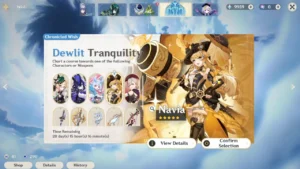
You’ve thrown 60 pulls into a banner and got nothing. You’re starting to think the game is rigged. It isn’t — but you’re almost certainly misreading how the system works, and that misreading is costing you characters.
Every gacha game in this guide — Genshin Impact, Honkai: Star Rail, Wuthering Waves, and Neverness to Everness — uses a guaranteed pull system called pity. Understanding how gacha pity works turns blind pulls into a real plan. Once you know the numbers, you know exactly when to pull and when to save.
Key Takeaways
- Every game has a hard pity (guaranteed 5-star) and a soft pity (where odds spike sharply)
- Your pity counter carries over between banners of the same type — it never resets when a banner ends
- Winning a 5-star doesn’t always mean you get the featured character — the 50/50 system adds another layer
- Your guarantee is more valuable than your raw pity count
- Average pulls for a featured 5-star in Genshin Impact and Honkai Star Rail: roughly 106 pulls on average when factoring in the 50/50
What Is Gacha Pity? (Plain-English Explanation)
Pity is a protection system built into every modern gacha game. Every pull you make without getting a 5-star increments a hidden counter. That counter either boosts your odds at a certain point (soft pity) or guarantees a 5-star at a set number (hard pity).
Think of it as a floor, not a ceiling. The game won’t let you pull forever and get nothing — but understanding where that floor sits, and what happens just before it, is what separates informed pullers from frustrated ones.
Hard Pity vs Soft Pity: The Two Numbers Every Gacha Player Needs
Hard pity is the pull number where a 5-star is guaranteed — no exceptions.
Soft pity is where the probability curve bends hard. Before soft pity, your base odds are low and flat. After soft pity activates, your chance of hitting a 5-star on each individual pull climbs fast — sometimes from under 1% per pull to over 30% within ten pulls.
Most players hit their 5-star during soft pity, not at the hard cap. The average is well below the maximum — and that gap matters when you’re budgeting pulls.
Genshin Impact vs Honkai Star Rail vs Wuthering Waves: Pity Rates Compared
| Game | Base 5-star rate | Soft pity starts | Hard pity |
|---|---|---|---|
| Genshin Impact | 0.6% | ~Pull 74 (community-verified) | Pull 90 |
| Honkai: Star Rail | 0.6% | ~Pull 74 (community-verified) | Pull 90 |
| Wuthering Waves | 0.8% | ~Pull 60 | Pull 80 |
| Neverness to Everness | ~0.8% (estimated) | ~Pull 60–65 (estimated) | Pull 80 (estimated) |
Genshin Impact and HSR soft pity thresholds are community-verified via large-scale pull tracking, not stated in official documentation. NTE figures are community estimates — verify against current official NTE sources before publishing.
Wuthering Waves has the most generous pity of the four: higher base rate, earlier soft pity, lower hard pity cap.
The 50/50 System Explained: Genshin, Honkai Star Rail, and Wuthering Waves
Getting a 5-star on a limited banner doesn’t guarantee the featured character. This is the part beginners miss most.
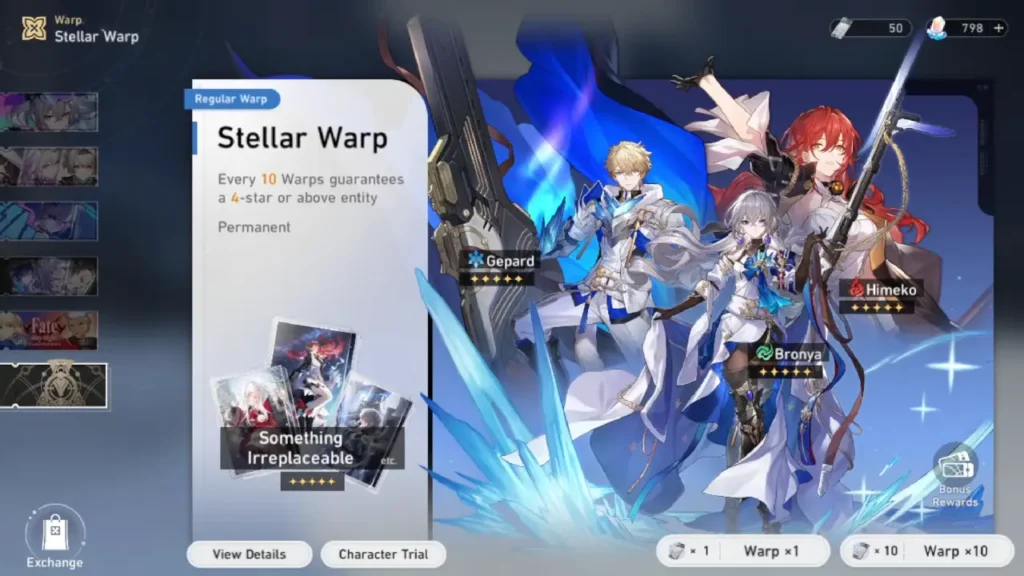
Genshin Impact and Honkai: Star Rail — 50/50 Rules
- Your first 5-star on a limited banner has a 50% chance of being the featured character
- If it isn’t (you “lose the 50/50”), your next 5-star on that banner type is 100% guaranteed to be featured
- This guarantee carries over when the banner ends — it doesn’t disappear
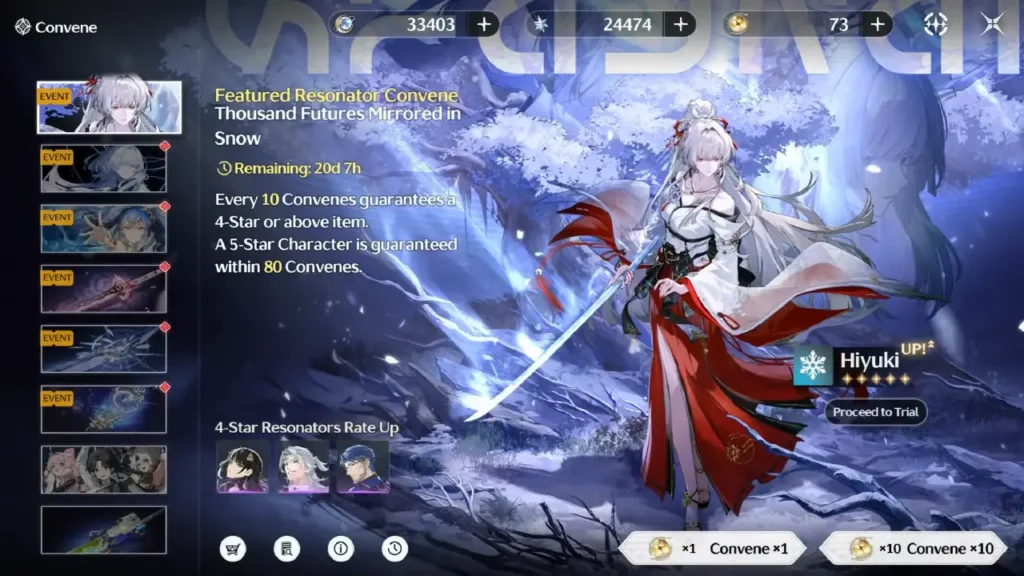
Wuthering Waves — 75/25 System
- Your first 5-star has approximately a 62.5% chance of being the featured resonator (community-reported)
- If you miss, the next is guaranteed — functionally a 75/25 system, not 50/50
- Wuthering Waves pity rules are more forgiving than Genshin or HSR
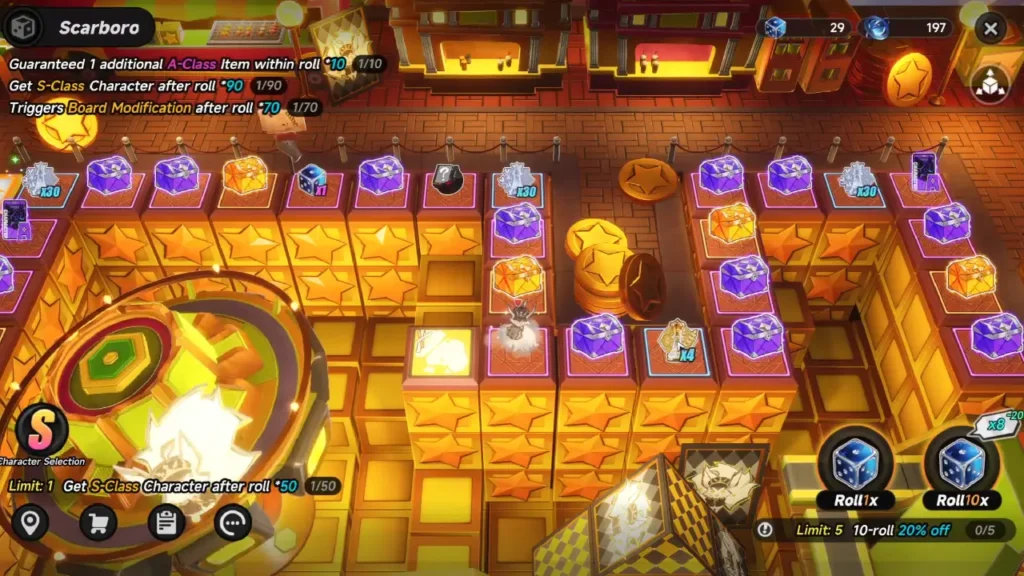
Neverness to Everness — Guarantee System
NTE uses a guarantee structure similar to Wuthering Waves. Check the current official NTE patch notes or the NTE wiki (wiki.gg) for exact percentages before your next pull — the game is still in active development and mechanics may be updated.
How Many Pulls Does a 5-Star Actually Cost? The Real Gacha Math
The hard pity cap is the worst case, not the average.
Because soft pity sharply increases per-pull odds from around pull 60–74, most players land their 5-star in that window. Large-scale pull tracking data from Paimon.moe (Genshin Impact) puts the average at around 62–65 pulls per 5-star.
But that’s per 5-star — not per featured character. Factor in the 50/50:
- Best case (win 50/50, hit soft pity): ~65 pulls for your featured character
- Worst case (lose 50/50, hit hard pity twice): up to ~180 pulls
- Statistical average: roughly 106 pulls per featured 5-star in Genshin Impact and Honkai: Star Rail (based on community pull data and probability modeling)
At 160 Primogems per pull in Genshin, that’s approximately 16,960 Primogems on average per featured character. That number reframes what “saving up” actually means.
Common Mistake: Tracking Pity and Ignoring Your Guarantee
Most beginners track pity count and forget guarantee status entirely. That’s the wrong priority.
Your guarantee — the locked promise that your next 5-star is the featured character — is worth more than a high pity number. A player at pull 1 with guarantee active is better positioned than a player at pull 60 without it.
Before pulling on any banner, check both:
- Your current pity count (pulls since last 5-star)
- Whether you’re on guarantee (did you lose the 50/50 last time?)
Both numbers together tell you exactly where you stand.
How to Track Your Gacha Pity Count (Free Tools)
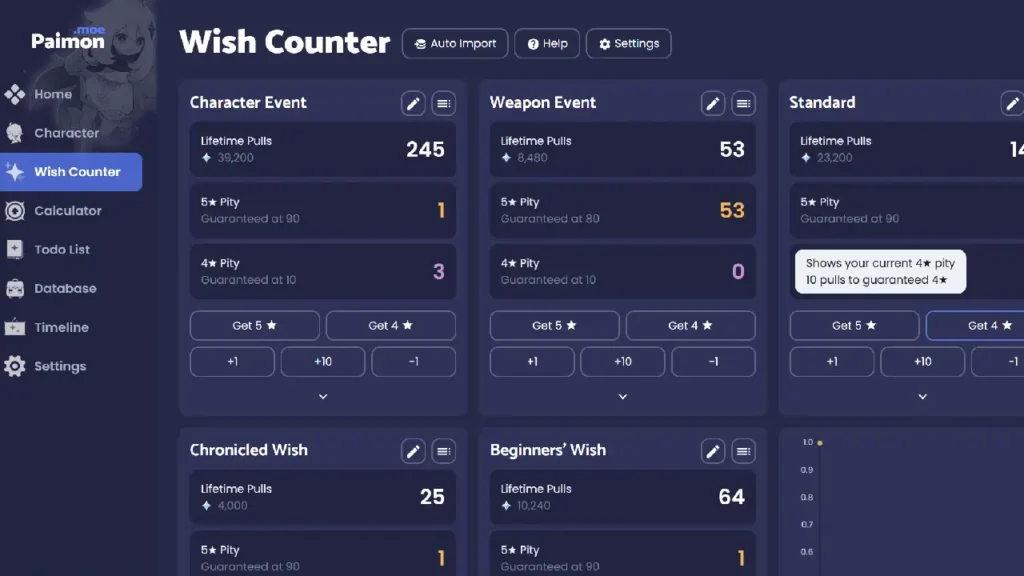
None of these four games display your pity count clearly in-game. Use these community-built trackers:
- Genshin Impact: Paimon.moe — import wish history, see per-banner pity and guarantee status
- Honkai: Star Rail: Search “Honkai Star Rail pull tracker” for current community tools
- Wuthering Waves: Search “Wuthering Waves pull tracker” — community tools updated regularly
- Neverness to Everness: Check the NTE wiki (wiki.gg) or community Discord for current recommended tools
Summary: What You Need to Know About Gacha Pity
Pity is math, not luck. Understand it and you pull with a plan.
- Know your hard pity and soft pity thresholds per game
- Your pity counter carries over — you never start fresh on a new banner of the same type
- Losing the 50/50 gives you a guarantee — that’s an asset, not a loss
- Track your pity with free community tools; the games don’t show it clearly
- Budget around 106 pulls on average per featured 5-star in Genshin/HSR — and less in WuWa
